Home Decor & Styling
Styling Ideas for a Joint Family Kitchen
A joint family kitchen has to work for very different daily routines under one roof: an early-morning tea ritual, a midday meal for one generation, a late dinner for another. Styling here is as much about function and diplomacy as it is about looks, and getting it wrong creates friction that's hard to undo.
Choose universally appropriate pieces
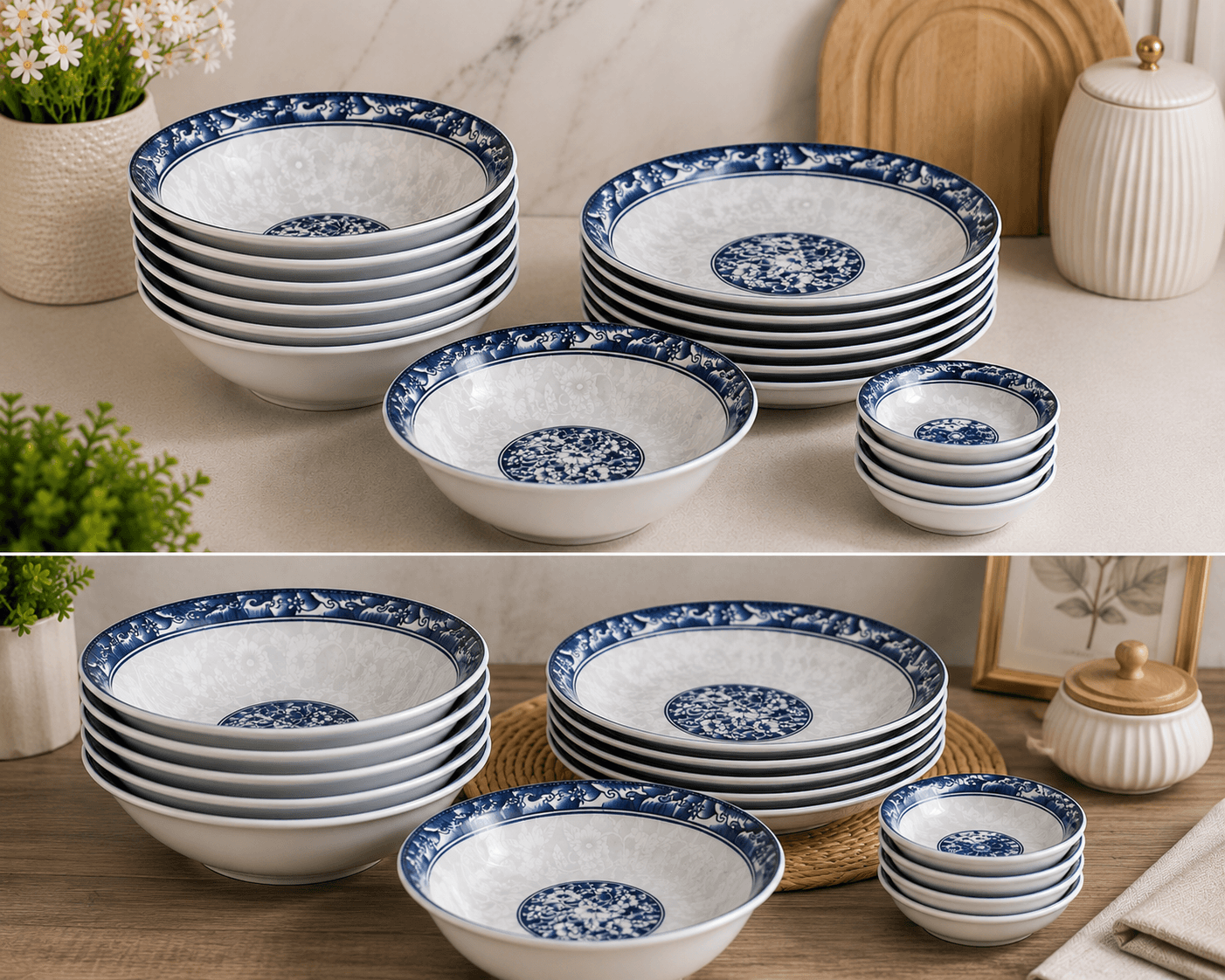
The Blue & White Porcelain Dinnerware Set works across generations: classic enough that nobody in the household feels it doesn't suit their taste, unlike a trendier pattern that might read as "too modern" or "too plain" depending on who's judging.
Separate storage, shared display
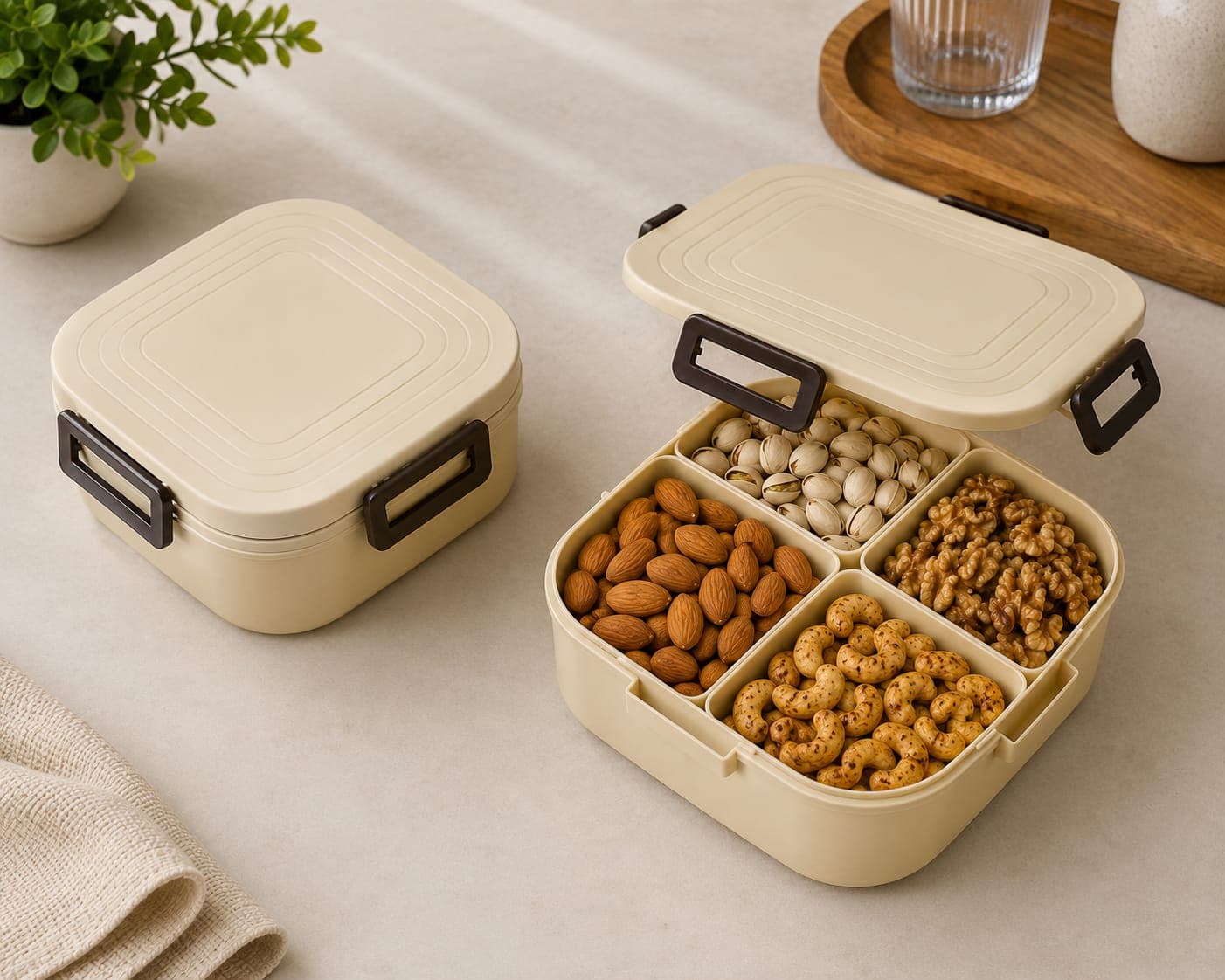
Keep individual preferences (specific spice blends, personal snack stashes) in separately labeled containers from an Airtight Storage Container Set, while sharing the decorative display pieces like a Marble-Finish Canister Set with Tray that everyone can enjoy without territorial disputes.
Consult before you style, not after
In a shared kitchen, get buy-in from whoever else cooks there regularly before making changes. Styling decisions that only reflect one person's taste tend not to stick in a joint household: pieces quietly get moved, replaced, or simply stop being used if nobody else feels ownership over them.
Respect existing rituals in your layout
If a particular corner is used every morning for tea preparation, don't restyle it purely for looks without checking whether it disrupts that daily habit. A Ribbed Glass Mug with Lid placed where the current mug lives is an easy win; moving the whole station for aesthetics is not.
Use servingware that scales for large meals
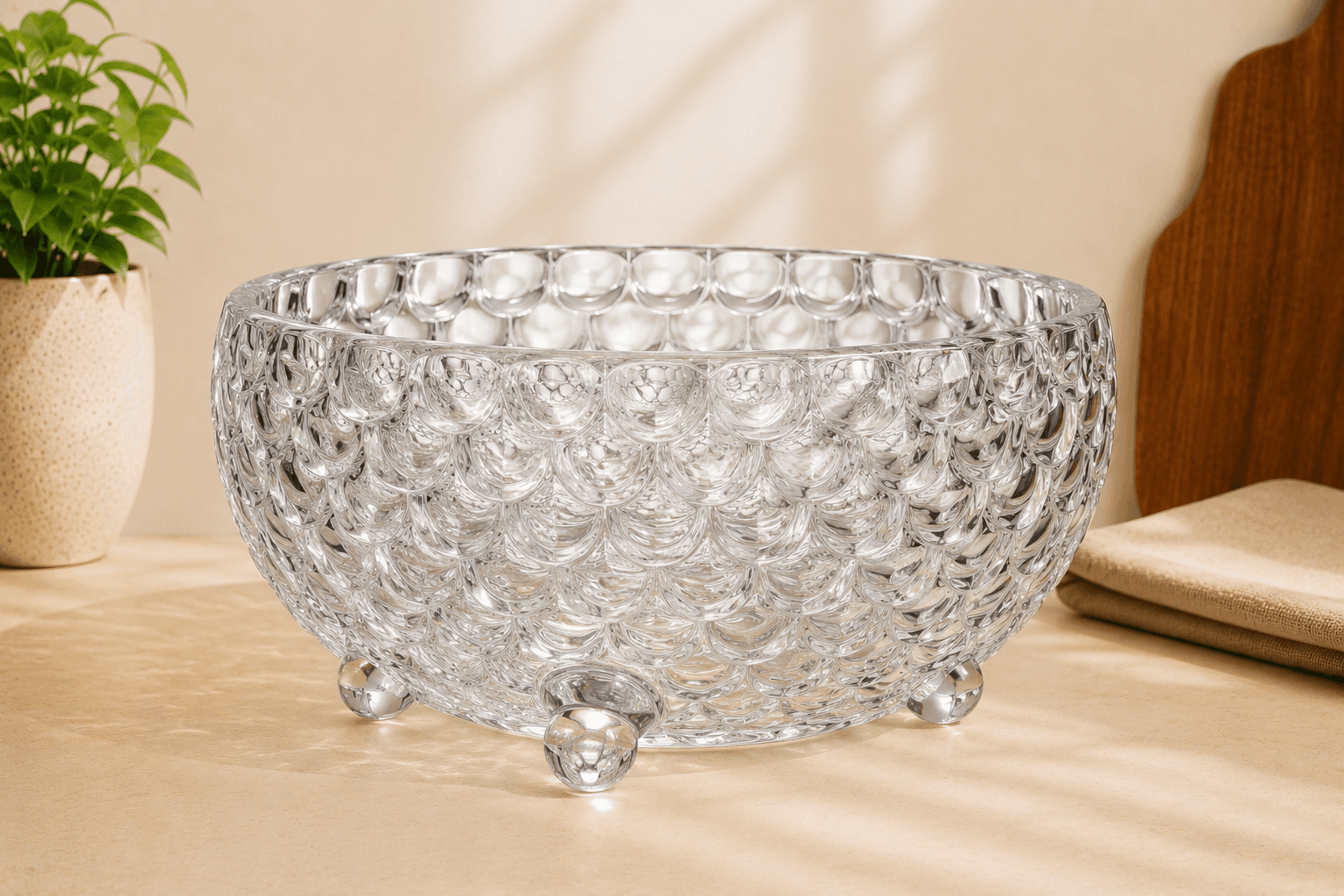
Joint family kitchens regularly cook and serve for more people than a nuclear household would. A Premium Glass Serving Bowl or two, kept accessible rather than saved for "special occasions," earns daily use in a house this size.
Create one neutral zone everyone can style together
Rather than dividing the kitchen into competing territories, designate one shelf or counter section as a shared styling project, perhaps anchored by a Crystal Glass Vase that different family members can refresh with seasonal flowers on rotation.
Let function win disputes over aesthetics
When taste conflicts across generations, function is the tiebreaker that ends most arguments quickly. A piece that's easy to clean, durable, and useful will get accepted by more people than one chosen purely for how it looks, even if it's slightly less exciting to the person who picked it out.
Plan for the biggest gatherings the kitchen actually hosts
A joint family kitchen often becomes the staging ground for large festival meals or gatherings that a nuclear household's kitchen never has to handle. Keep enough servingware (beyond just the Blue & White Porcelain Dinnerware Set for daily use) to cover those bigger occasions without needing to borrow from neighbors or relatives.
Give the oldest and youngest generations a voice too
Styling decisions in joint households often default to whoever cooks most, but grandparents and younger family members use the kitchen too, just differently. A quick check-in with everyone before a bigger change avoids a kitchen that stops feeling shared.
Designate a rotating "styling lead" role
Rather than one person permanently owning kitchen decisions, rotate responsibility for small styling updates every few months among the adults in the household. This keeps the kitchen from feeling like any single person's exclusive domain, which matters especially in larger joint families where several generations use the space daily.
Keep celebratory servingware accessible
A joint family kitchen often has "special occasion" pieces reserved for guests that rarely see use otherwise. Bringing out a Premium Glass Serving Bowl for a regular family dinner occasionally, not only for visitors, reinforces that the household's own gatherings matter just as much as ones for outside guests.
Build in flexibility for dietary and cultural differences
Joint families sometimes span different regional or dietary practices under one roof. Storage and display choices that don't assume one uniform way of cooking or eating (separate labeled containers, neutral shared servingware) accommodate this diversity without anyone feeling like their needs are an afterthought.
Ready to gift?