Home Decor & Styling
How to Style Open Kitchen Shelves
Open kitchen shelves are unforgiving in a way closed cabinets aren't: every item is permanently on display, which means styling actually matters here, not only organization tucked safely behind a door where nobody has to look at it.
Symmetry isn't the goal, balance is
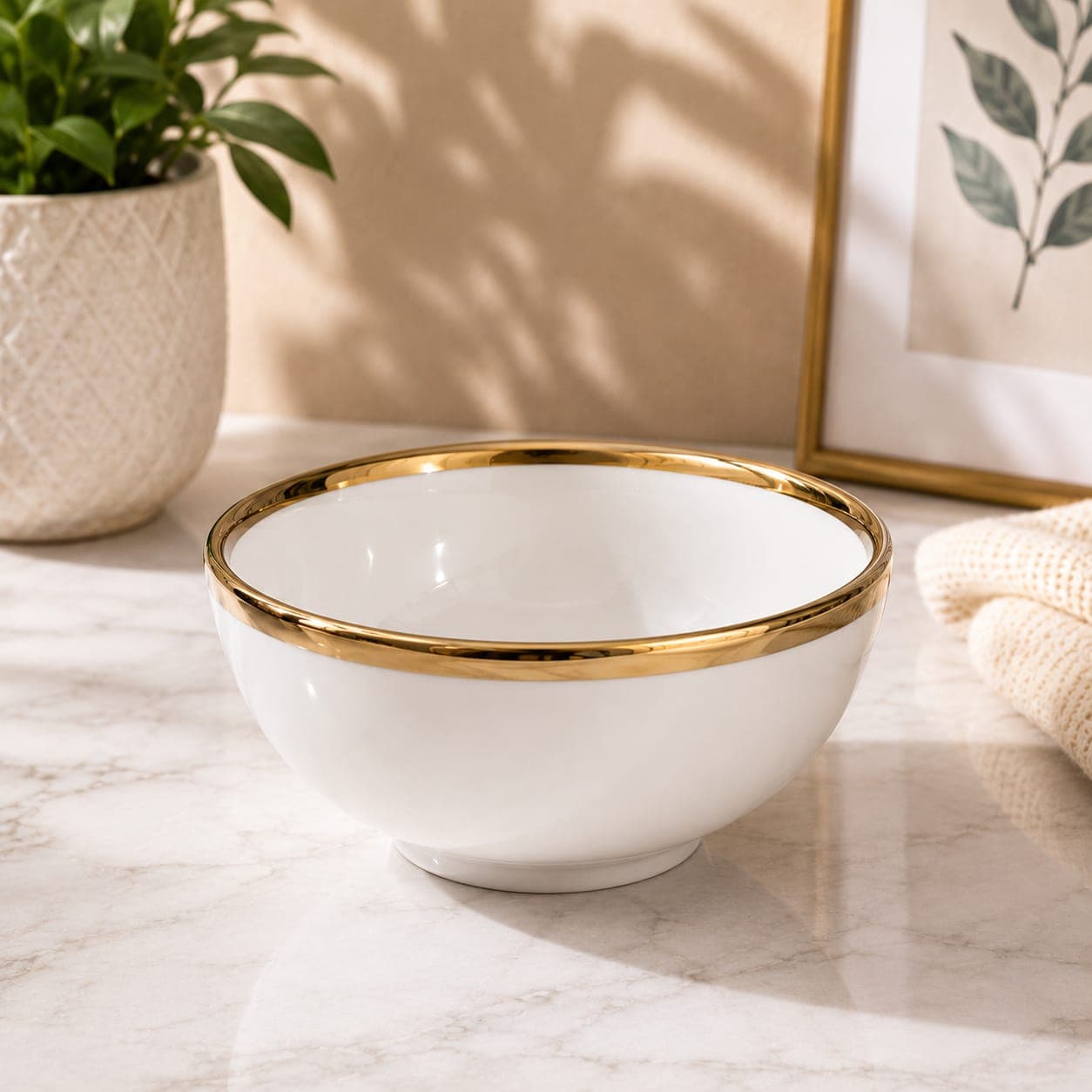
Don't mirror one side against the other exactly: vary heights and shapes, like pairing the Ceramic Bowl with Gold Rim with a taller jar on the same shelf. Perfect symmetry tends to look stiff on open shelving specifically, almost like a display case rather than a lived-in, -used kitchen.
Leave visual breathing room
A shelf packed edge to edge reads as clutter regardless of how nice each individual piece is on its own. Leave gaps between groupings: negative space is part of the styling, not empty space you simply failed to fill with something else.
Rotate what's in view
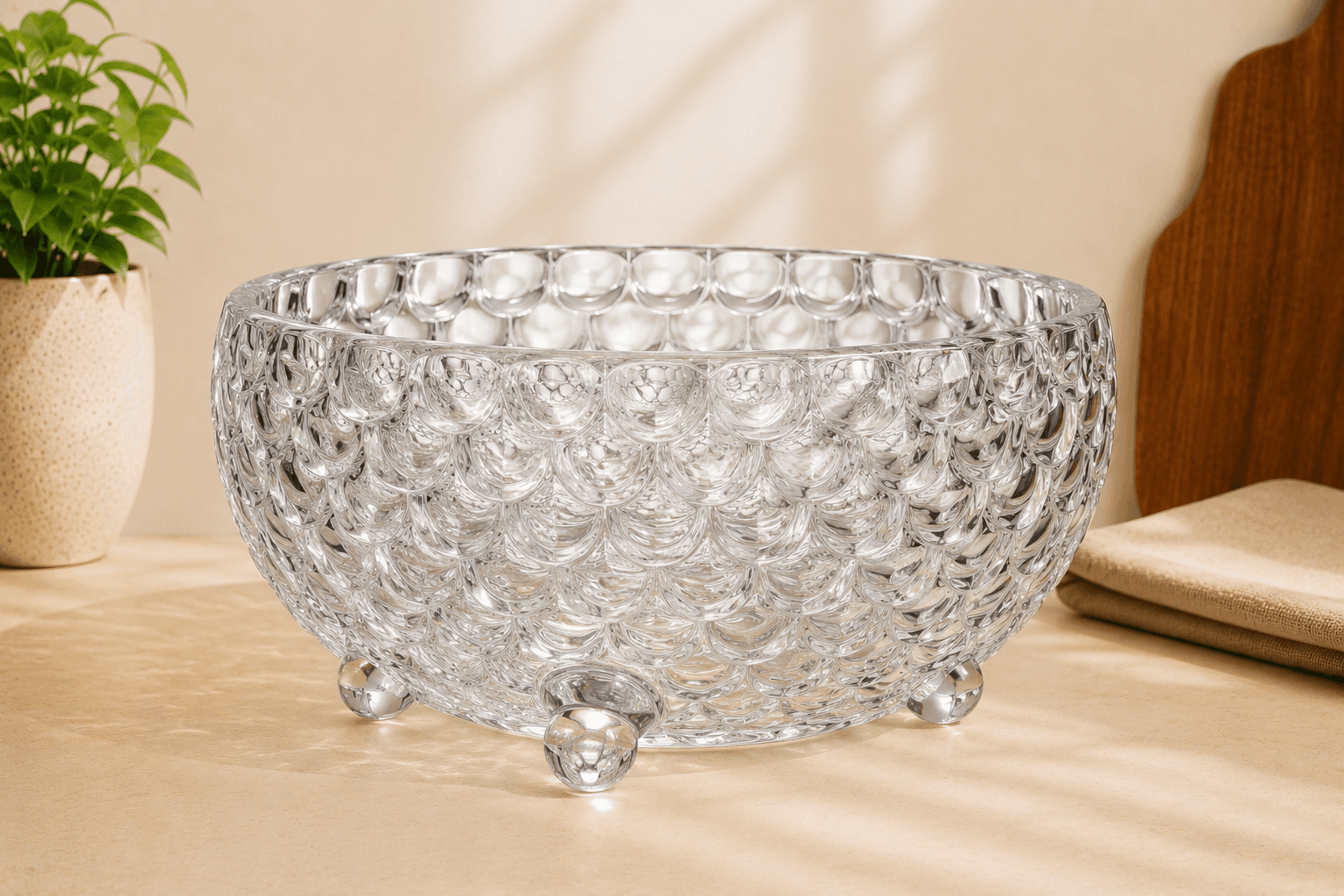
Move the Ribbed Glass Straw Jar Set to the front for a while, then swap in something else later. Open shelves benefit from occasional refreshing in a way closed storage never needs, since everything's visible all the time, every single day of the week.
Function still lives here
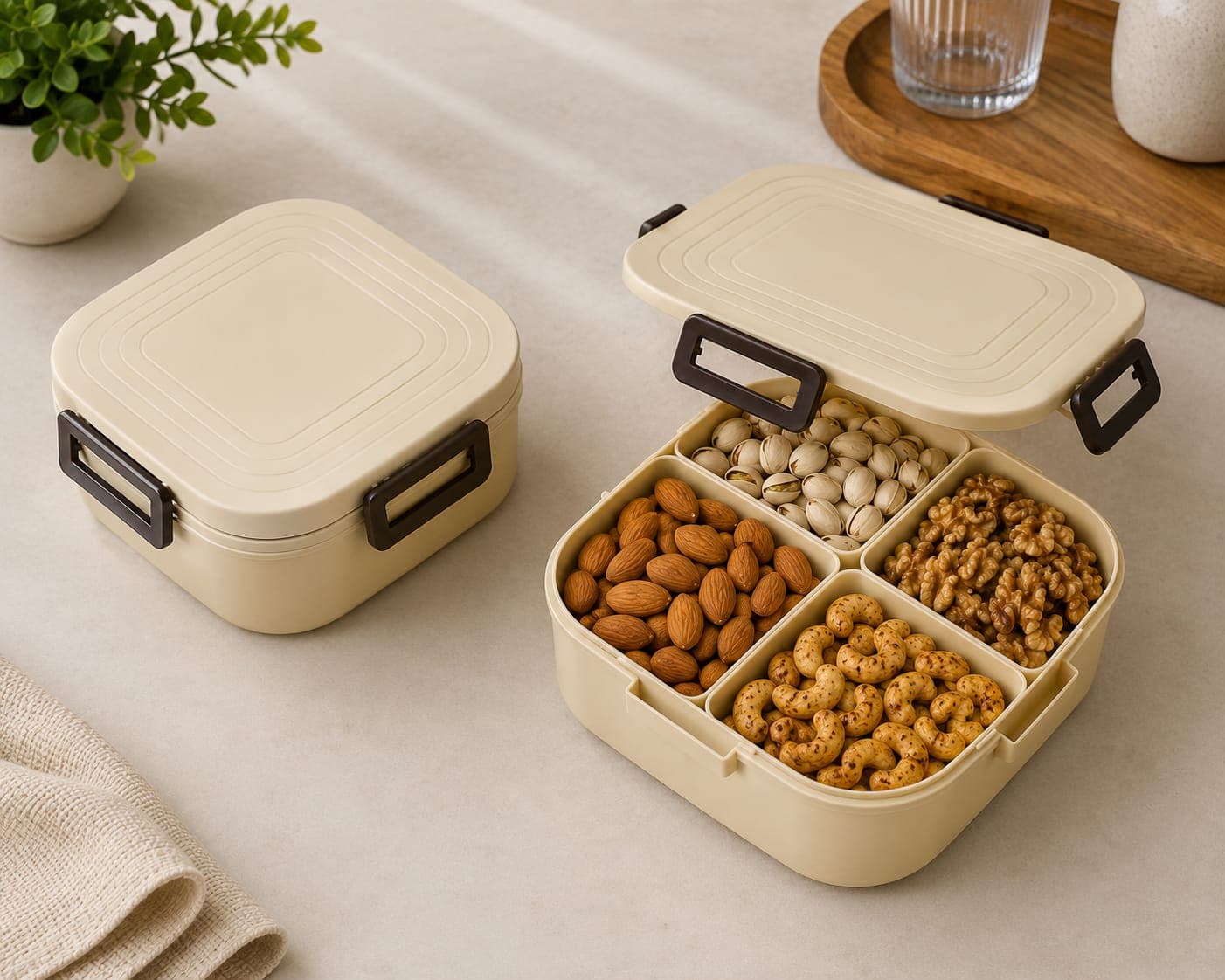
Open shelves aren't purely decorative: keep used items like the 4-Compartment Snack & Nut Box accessible on them, not only the prettiest pieces you own. A shelf that's all show and no use looks staged rather than lived in and worked from.
Group by color before you group by category
Surprisingly, sorting a shelf by color tone rather than strictly by item type often looks more intentional: a cluster of warm-toned glass next to a cluster of white ceramic reads calmer than category-based grouping ever quite manages to.
Consider what's underneath
Open shelves sit above counters that get used daily: make sure nothing overhangs into your actual workspace, and keep the bottom shelf reserved for things you reach for constantly, not display pieces that just get in the way of daily cooking.
Don't ignore the back wall
A plain wall behind open shelves can make even a well-styled arrangement feel flat: a subtle contrasting paint or a simple backing texture gives the objects in front something to stand out against, rather than blending into a plain surface.
Keep cleaning in mind from the start
Open shelves collect kitchen grease and dust faster than closed cabinets, so favor pieces that wipe down easily over ones with intricate detailing that traps residue: practicality here saves a lot of maintenance headache later.
Anchor each shelf with one larger piece
A Crystal Glass Vase or the Marble-Finish Canister Set with Tray gives a shelf a clear focal point, so smaller items around it read as supporting detail rather than competing for attention on their own.
Use height to create rhythm across shelves
If you have two or three shelves stacked, avoid identical arrangements on each: vary what's tall and what's low from shelf to shelf so the eye moves through the whole unit instead of seeing the same pattern repeated.
Keep one shelf almost empty
A single shelf left mostly bare, holding just one or two pieces like the Deer Mug, gives the whole unit somewhere to visually rest. It reads as intentional restraint rather than an unfinished section waiting to be filled.
Consider the shelf's sightline from the main room
If your kitchen is open to the living area, style the side of the shelf visible from the couch or entryway more carefully than the side only you see while cooking: prioritize where the eyes land first.
Let the season nudge small changes
A slightly different grouping in winter versus summer, swapping what's toward the front, keeps open shelving from going stale visually over a full year of being constantly on display to anyone walking through.
Resist copying a styled photo exactly
A shelf styled purely to mimic an online photo often ignores what your kitchen needs day to day: use inspiration as a starting point, then adjust for your real cooking habits and the items you reach for.
Keep a small rotation schedule, even a loose one
Marking a rough monthly reminder to refresh what's on display prevents open shelving from going stale. It doesn't need to be elaborate, just consistent enough that the arrangement never feels forgotten or static.
The edit-down test
If you can't explain why a specific item is on an open shelf versus in a cabinet, it probably belongs in the cabinet. Open shelving rewards intentionality more than any other storage format in the kitchen, precisely because there's nowhere to hide a bad decision.
Ready to gift?