Home Decor & Styling
How to Style Floating Shelves in a Small Kitchen
Floating shelves in a small kitchen have to earn their space. There's no room here for purely decorative clutter the way there might be in a larger kitchen with counter to spare: every item on a compact shelf needs to justify itself, whether through daily use or deliberate styling.
Function first, almost always
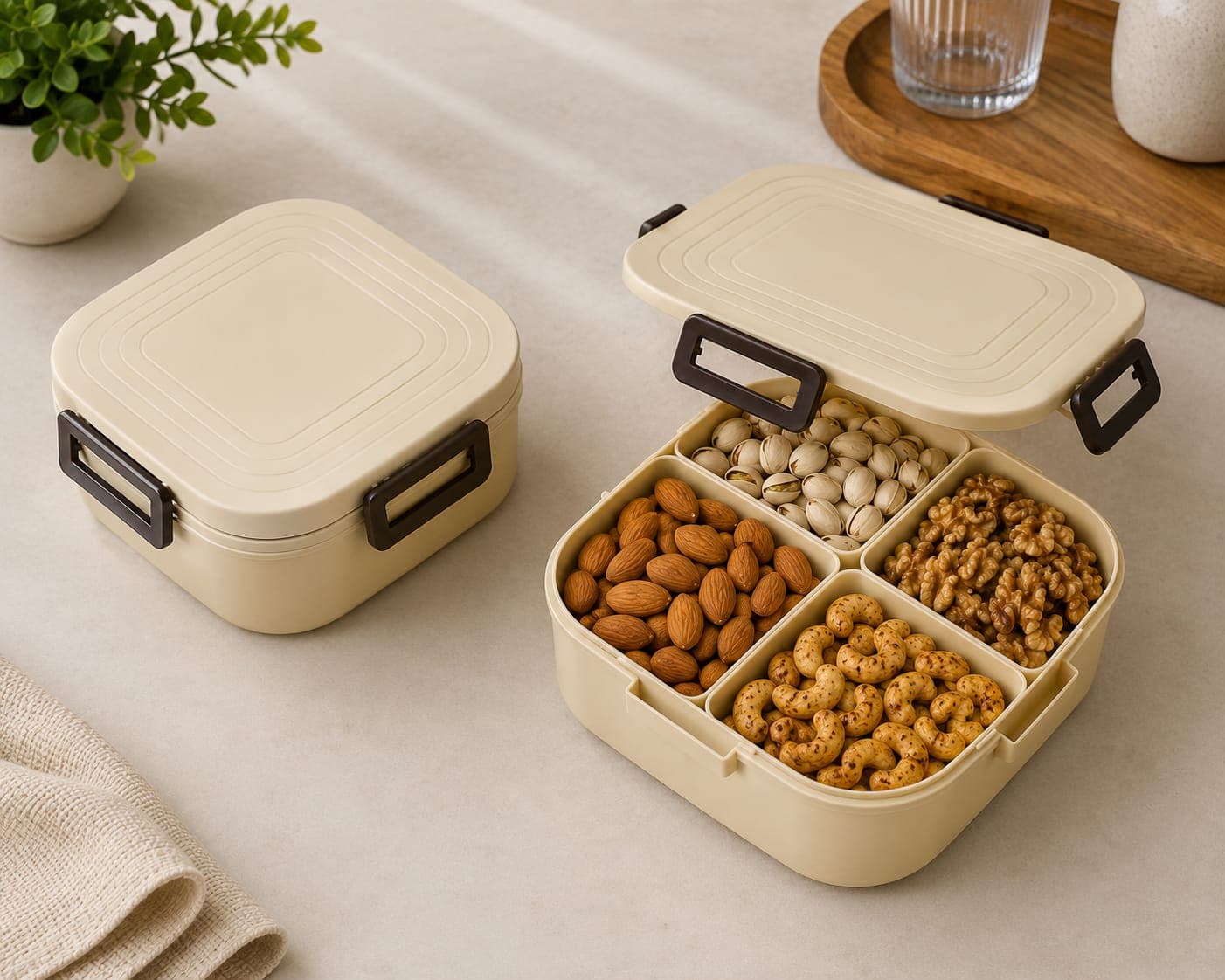
A 4-Compartment Snack & Nut Box or an Airtight Storage Container Set belongs on a small-kitchen shelf precisely because it's doing real work, not only sitting there looking nice. In a tight kitchen, function-forward pieces should make up the bulk of what you display.
One display item, maximum
If you have room for exactly one non-functional piece, the Deer Mug works well: decorative on its own, but usable for spices or utensils if space gets tighter later. Committing to a single decorative object, rather than several, is what keeps a small shelf from tipping into clutter.
Depth matters more than width here
In small kitchens, shallow shelves prevent items from crowding forward into your reach zone or blocking your view of the counter below. Measure the shelf depth before buying anything, since a piece that fits comfortably on a standard shelf can feel oversized on a narrow one.
Use vertical space instead of spreading out
If your shelf can support stacking, an Airtight Storage Container Set stacked two or three high uses height rather than width, which matters enormously when horizontal shelf space is the scarcest resource in the kitchen.
Group by frequency of use
Items you reach for daily (a Ribbed Glass Mug with Lid, your salt and pepper shakers) belong at the front and center of a small shelf. Anything used only occasionally should sit further back or on a higher shelf, since compact kitchens can't afford to waste prime, easy-reach space on rarely-used items.
Keep the shelf visually calm
Because a small kitchen shelf sits close to eye level in a compact room, visual noise here is more noticeable than it would be on a taller, less central shelf elsewhere in the house. Stick to two or three colors and avoid mixing too many materials: glass, ceramic, and steel all together starts to look chaotic fast in a tight space.
Reassess every few months
Small kitchens change faster than large ones because there's less slack to absorb new purchases. Revisit your floating shelf periodically and remove anything that's crept on there without earning its spot: the discipline required is small but constant.
Check the shelf's weight limits before committing
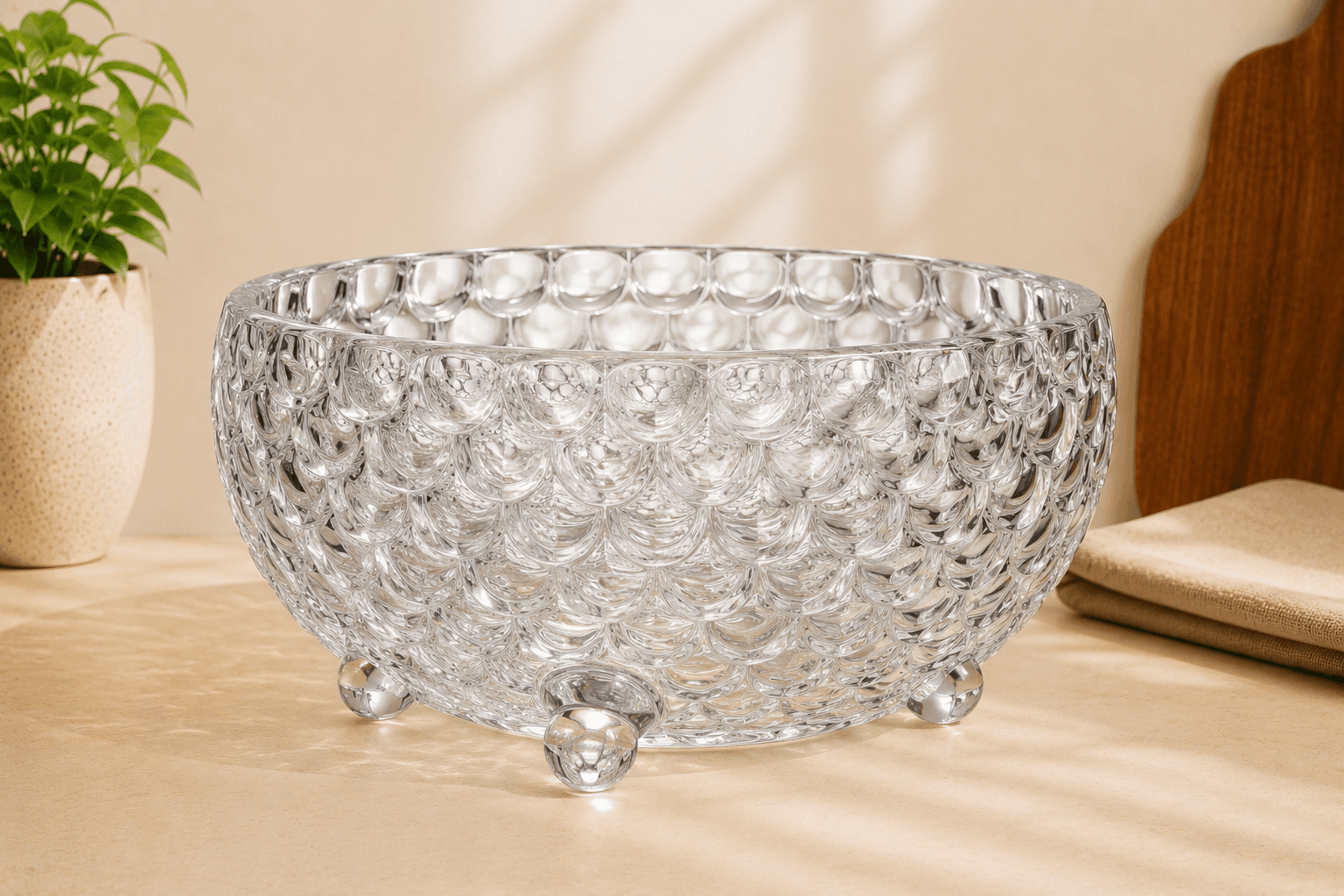
Floating shelves, especially in older or rented apartments, often have lower weight tolerances than built-in cabinetry. Glass pieces like a Crystal Glass Vase are usually fine, but avoid stacking multiple heavier ceramic pieces on a single small bracket without confirming it can hold the load safely.
Use the underside of the shelf too, if possible
If your floating shelf allows for hanging hooks underneath, mugs and small utensils can hang there instead of taking up surface space, freeing the shelf top for the one or two pieces (a 4-Compartment Snack & Nut Box, say) that need flat surface room.
Match shelf styling to how often the kitchen gets used
A small kitchen used mainly for quick meals warrants a leaner, more function-heavy shelf than one where someone cooks elaborate meals daily. Be honest about your actual cooking frequency and habits before deciding how much of the shelf should go to display versus daily-use storage.
Consider open shelving's visibility trade-off
Unlike closed cabinets, floating shelves expose everything to view at all times, which means even functional items need to look reasonably tidy. A Steel Salt & Pepper Shakers set that's chipped or mismatched will bother you more on open shelving than it would tucked inside a cabinet door.
Keep a small step stool nearby if shelves sit high
In compact kitchens, floating shelves sometimes get placed higher than ideal simply because there's no other spot for them. If reaching items requires a stretch, keep a small stool close by rather than developing the habit of leaving frequently-needed items on the counter permanently to avoid the climb.
Ready to gift?