Home Decor & Styling
How to Mix Metals in Your Kitchen Decor (Gold, Steel & More)
Mixing metals in kitchen decor used to be considered an outright styling mistake. Everything had to match exactly, down to the cabinet handles. That rule is dead, but there's still a genuine right and wrong way to actually pull it off well.
Why the "everything must match" rule existed at all
Matching metal finishes used to be the easiest way to guarantee a kitchen didn't look accidental, back when most home decor advice was written for people without much styling confidence. It's a safe default, not an actual design principle, which is why it's fine to break once you understand what made it safe in the first place.
Pick a dominant and a supporting metal
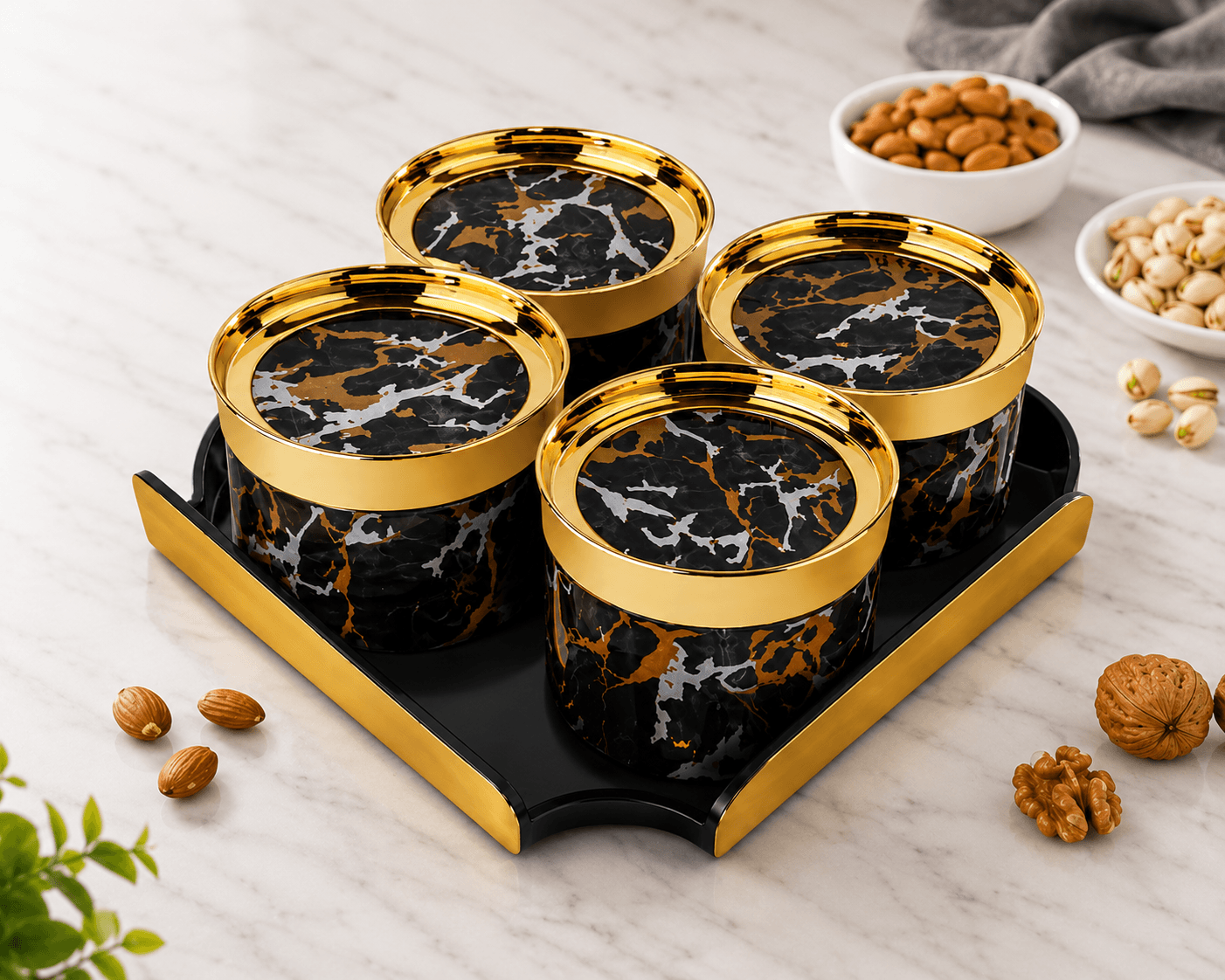
Let gold lead (the Marble-Finish Canister Set with Tray is a strong anchor for this) and let steel, via Steel Salt & Pepper Shakers, play a clearly supporting role, rather than splitting the two evenly down the middle.
Repeat each metal at least twice
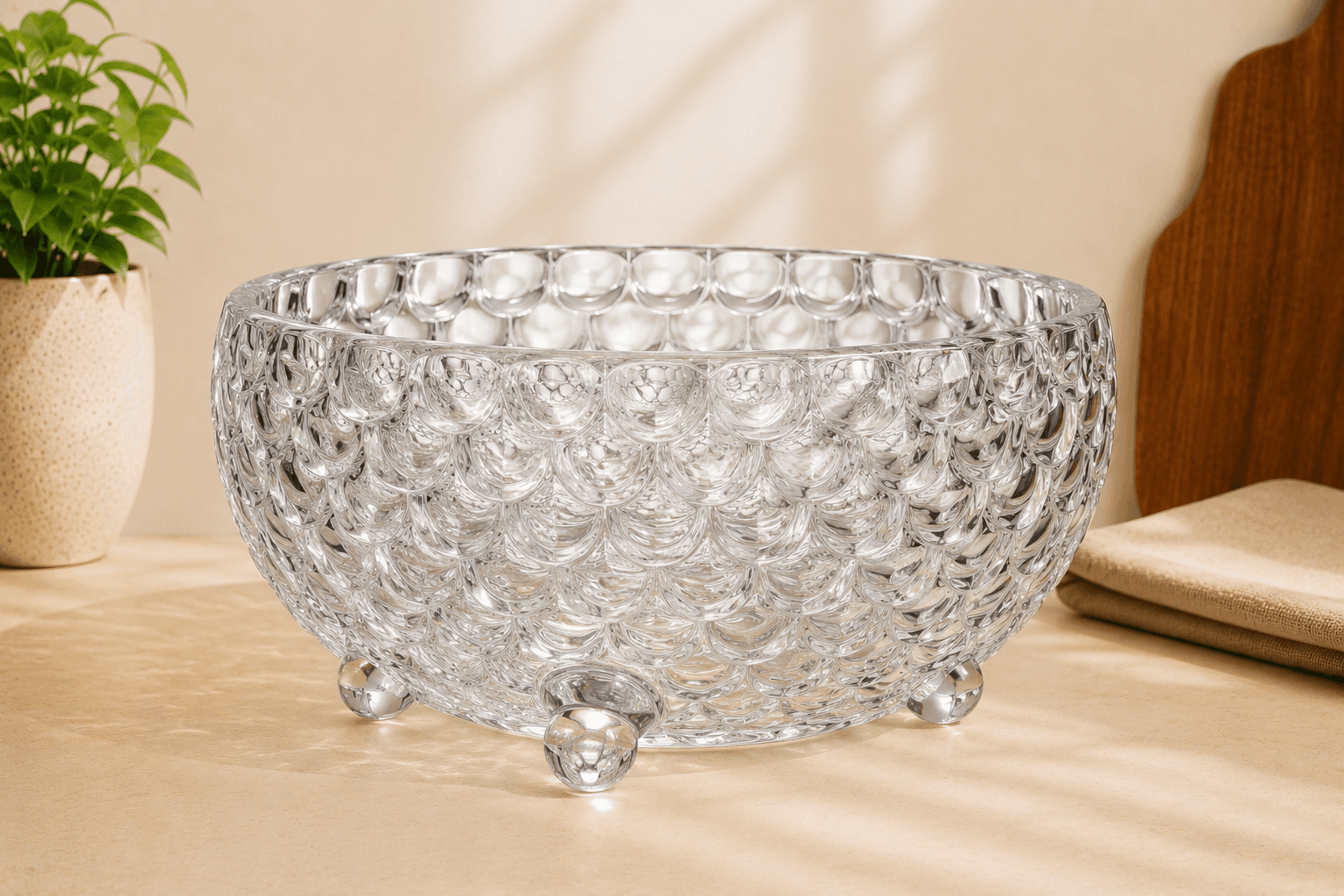
A single gold accent surrounded by steel everywhere else looks like an accident rather than a choice. The Ceramic Bowl with Gold Rim helps gold show up a second time, reinforcing that it's intentional.
Separate them spatially
Cluster your gold pieces in one zone and your steel pieces in another, rather than alternating metal by metal across the same shelf: grouped by metal reads as far more deliberate than interleaved.
Let one metal own the "hardware," the other own the "objects"
If your taps and cabinet handles are steel, let your displayed objects lean gold, or vice versa. This is the split that photographs best in real, lived-in kitchens, not only staged styling shoots.
Add a third material sparingly, if at all
A Deer Topper Glass Jar introduces glass as a neutral third material that doesn't compete with either metal: useful once gold and steel are already balanced, but risky to add before that balance is established.
When in doubt, warm wins
Gold and brass tones photograph and read warmer in most Indian kitchen lighting conditions. If you're unsure which metal to lead with, gold is usually the safer dominant choice by default.
Live with it before committing further
Buy one or two pieces in your chosen dominant metal first, live with the combination for a few weeks, then decide whether to expand. It's far easier to course-correct a small mixed-metal purchase than an entire kitchen's worth bought all at once.
Use fixed hardware as your constraint, not your enemy
If your taps, handles, or light fixtures are a metal you didn't choose and can't easily change, work with it rather than fighting it: treat that fixed metal as your supporting tone and build your dominant, displayed metal around it instead.
Natural light changes how metals read
Gold and steel both shift in appearance under different lighting: a combination that looks balanced under warm evening light can look mismatched in harsh daylight. Check your mixed-metal setup at more than one time of day before deciding it's finished.
Extend the same logic beyond the kitchen
Once a gold-and-steel balance works in the kitchen, the same dominant-and-supporting approach translates cleanly to adjoining spaces like a dining area or open-plan living room: consistency across connected spaces reads as a deliberate whole-home choice rather than a kitchen-only experiment.
Trust your eye over a rigid ratio
There's no exact percentage split that guarantees mixed metals look right: trust how a space feels once pieces are in place over any formula. If gold-dominant with steel support doesn't look right in your specific kitchen's lighting and layout, flipping the ratio is a legitimate option too.
Don't forget cabinet and drawer hardware
Handles and knobs are often the largest visible metal surface in a kitchen, yet they're frequently ignored when planning a mixed-metal scheme: factor them in as part of your dominant-or-supporting split, not as a separate, unrelated decision.
Copper can work as a genuine third note
Once gold and steel are balanced, a small copper accent (used sparingly, in just one piece) can add warmth without disrupting the two-metal system, as long as it stays a minor accent rather than competing for the dominant role.
Revisit the balance once a year
Kitchens accumulate new pieces gradually, and a mixed-metal balance that worked when you set it can drift out of proportion without anyone noticing: a quick annual check keeps the dominant-and-supporting ratio from quietly tipping the wrong way over time.
Ready to gift?