Home Decor & Styling
Choosing Decor That Photographs Well for Instagram
Decor that looks great in person doesn't always translate to photos: different qualities matter for a phone camera than for the naked eye standing in the room, and a lot of beautiful decor photographs as flat or forgettable simply because it wasn't chosen with a lens in mind.
Texture and light interaction wins on camera
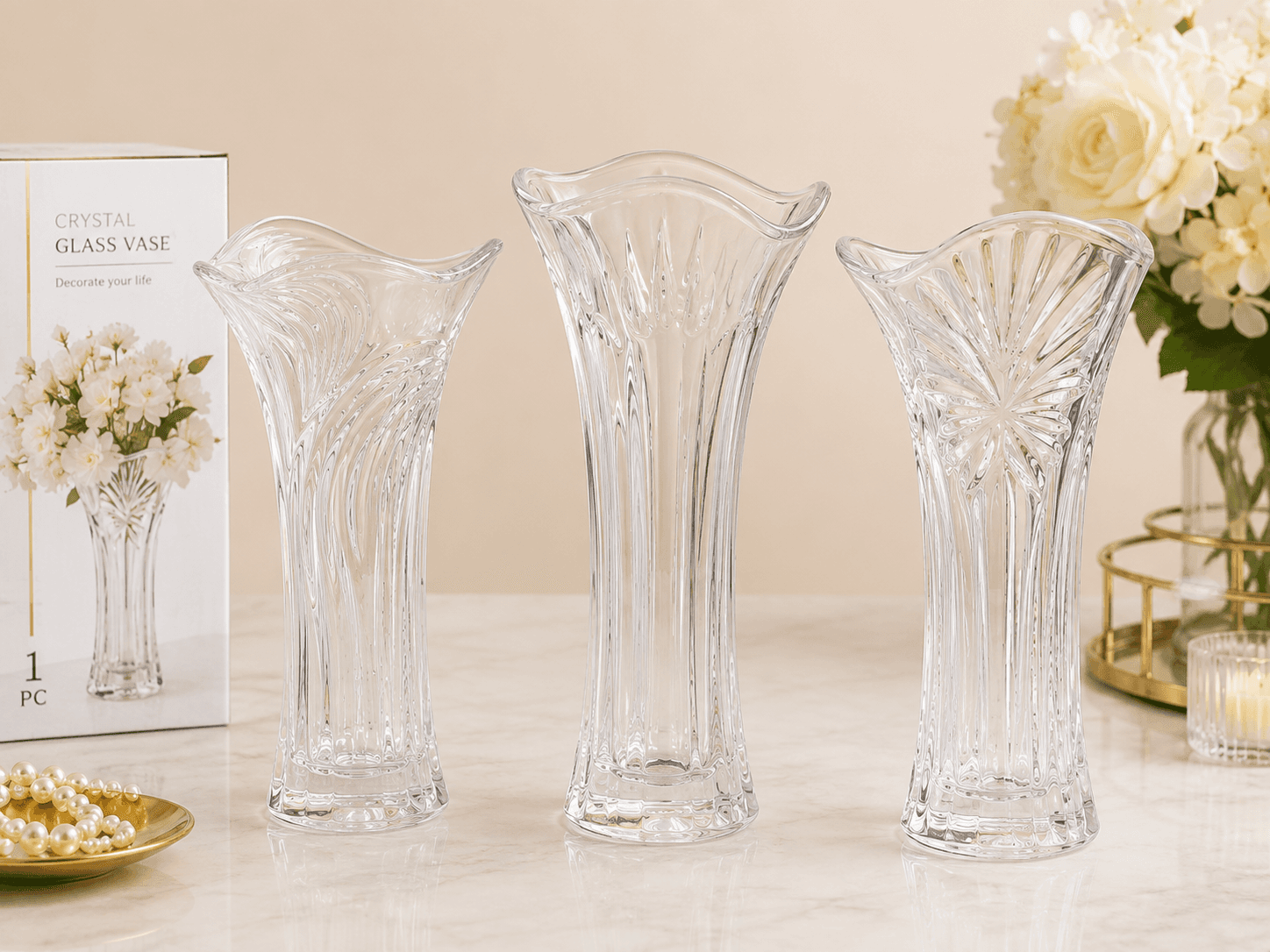
The Crystal Glass Vase or Bubble-Textured Glass Jar photograph better than flat, matte pieces because texture catches light in ways a camera actually registers and a phone sensor can pick up even in average indoor lighting.
Contrast over subtlety, every time
Photos flatten subtle color variations that read fine to the naked eye. Go for stronger contrast (dark against light, like the Marble-Finish Canister Set with Tray's black-and-gold combination) for anything you plan to photograph often, since low-contrast arrangements tend to look muddy or unremarkable once compressed into a photo.
Style for the frame, not the whole room
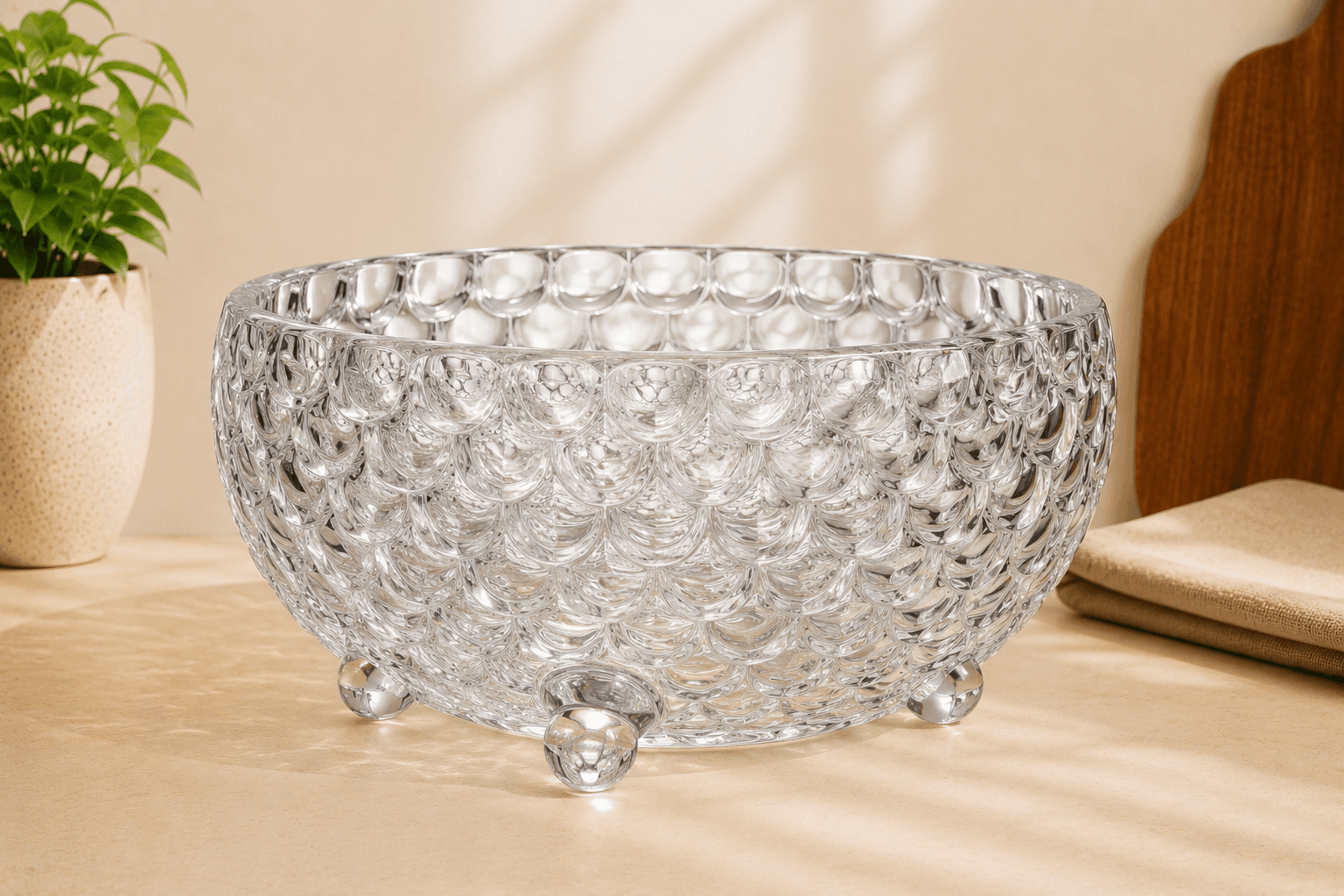
A photogenic corner doesn't require your whole space to be photogenic. Pick one well-composed spot (perhaps a shelf anchored by a Crystal Bowl on Ball Feet) rather than trying to make every surface in your home equally camera-ready, which is exhausting and usually unnecessary.
Consider negative space in the frame, not only the object
A single striking piece surrounded by breathing room photographs better than a busy arrangement, because negative space gives the eye (and the camera) somewhere to rest. This matters more in photography than in person, where you can look around freely.
Natural light beats any indoor lighting for photos
Position your most photogenic decor near a window where possible. A Deer Mug shot in soft natural daylight will consistently outperform the same piece under a warm indoor bulb, which tends to cast a yellow tint that phone cameras struggle to correct for automatically.
Reflective surfaces need careful angling
Glass and crystal pieces can catch unwanted reflections (a window frame, your own phone, an overhead light) that distract from the piece itself. Shoot from a slight angle rather than straight-on to avoid these reflections landing directly in frame.
Remember that camera-ready and livable aren't always the same thing
It's worth being honest that a home styled purely for photos can feel a bit staged to live in day to day. Keep your most photogenic corner as one deliberate spot, and let the rest of your home be styled primarily for comfort and daily use rather than an audience.
Plan a couple of alternate angles for the same corner
A single photogenic spot can usually be shot from two or three different angles (from above looking down at a Premium Glass Serving Bowl, or straight on catching the vase behind it) which gives you variety in what you post without needing to restyle multiple corners of the home.
Clean the piece itself right before shooting, not only the room
Fingerprints and dust show up far more obviously in a photo than to the naked eye in the room, especially on glass and crystal. A quick wipe of your chosen piece immediately before shooting makes a bigger difference to the final image than almost any other single step in the process.
Shoot the same corner across different times of day
Natural light shifts dramatically over a few hours, and a corner that looks flat at noon might look striking at golden hour. Before committing to one "photo corner" permanently, test it a few times across the day to find when it photographs best with the light you have available.
Keep props minimal and swap them out, don't accumulate them
It's tempting to build an ever-growing collection of small photo props over time. A tighter rotation of a few good pieces (a Deer Mug, a small vase) kept fresh through occasional rearrangement outperforms a large prop collection that ends up cluttering the frame instead of focusing it.
Remember editing can only do so much
Good lighting and a well-chosen, well-placed object will always outperform a mediocre setup rescued by heavy editing afterward. Spend the bulk of your effort getting the actual arrangement and light right before the photo is taken, rather than relying on filters to fix a fundamentally flat setup.
Ready to gift?